Voicing Hand
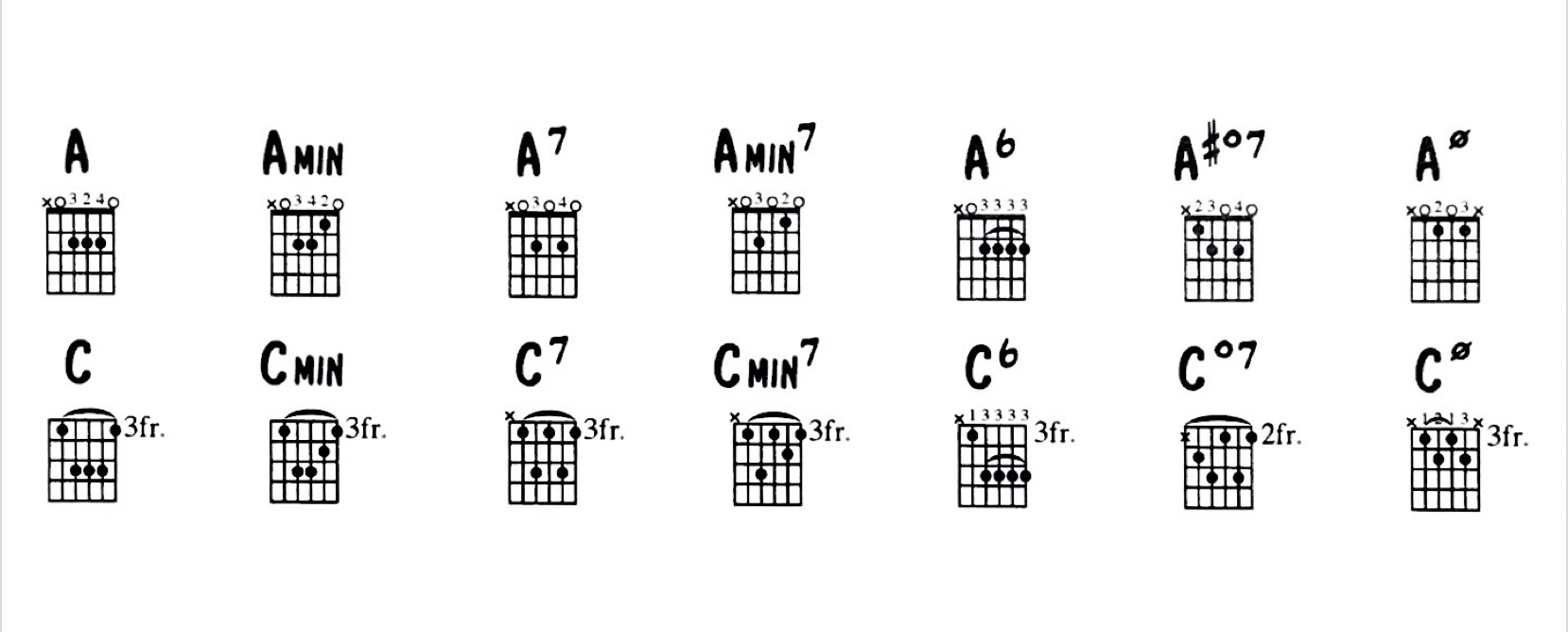
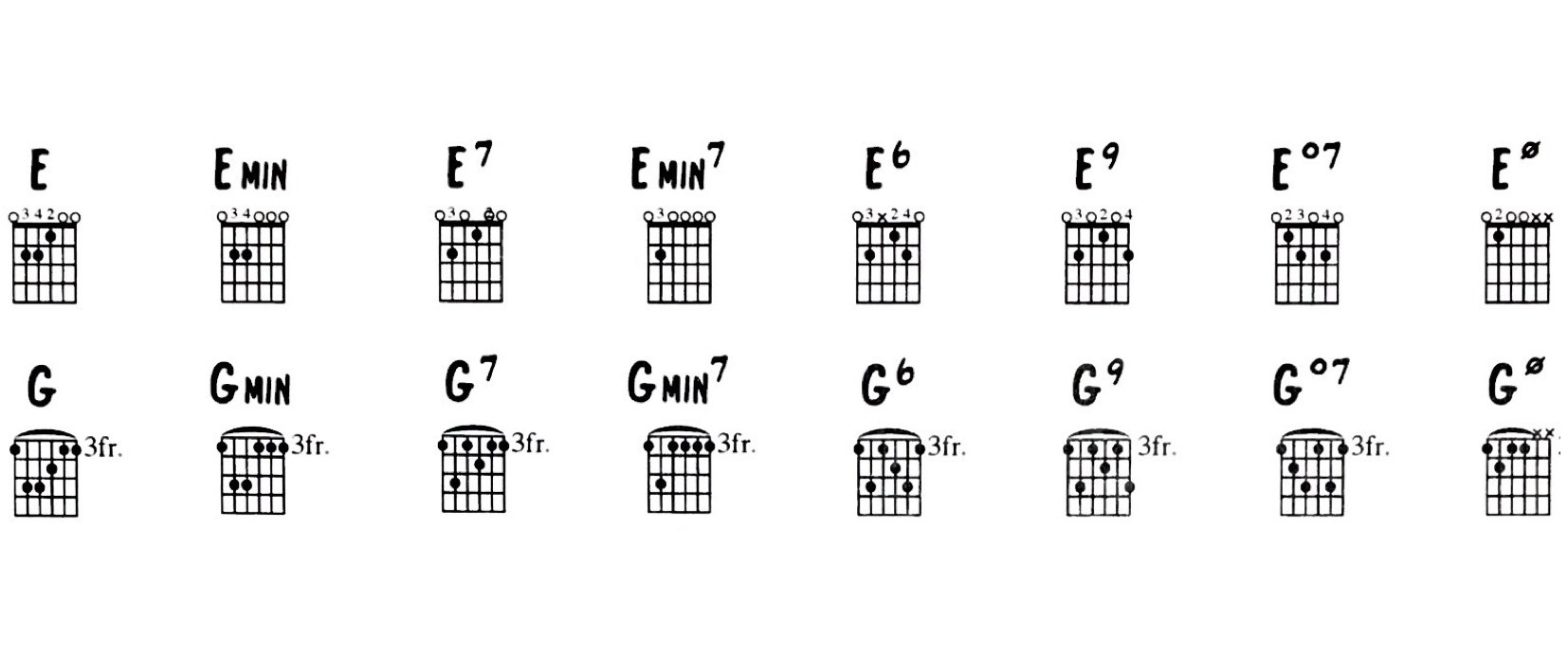
Barre chords are a common guitar technique, however, only four participants indicated an ability to use barre chords prior to this program. The other participants reported this style of chord was too difficult. While barre chords are difficult, they are very useful as they do not use open strings. Once mastered, barre chords can be moved up and down the fretboard to facilitate access to all 12 keys.
Barre chords were broken down into components and participants were invited to practice each component separately before drawing these elements together into barre chords. Barre chords are formed by using the first finger to temporarily shorten the length of all strings, effectively raising the pitch of the entire guitar. This requires the ability to apply pressure consistently across all strings, a skill not required for open chords and often not mastered by entry level guitarists. Participants were encouraged to practice forming the barre on its own without the chord shape, so they could develop the strength and coordination to form a successful barre. Participants were also encouraged to practice the barre towards the middle of the fretboard. Typically, guitarists attempt to barre the 1st fret but this is the most difficult position as it requires the most strength.
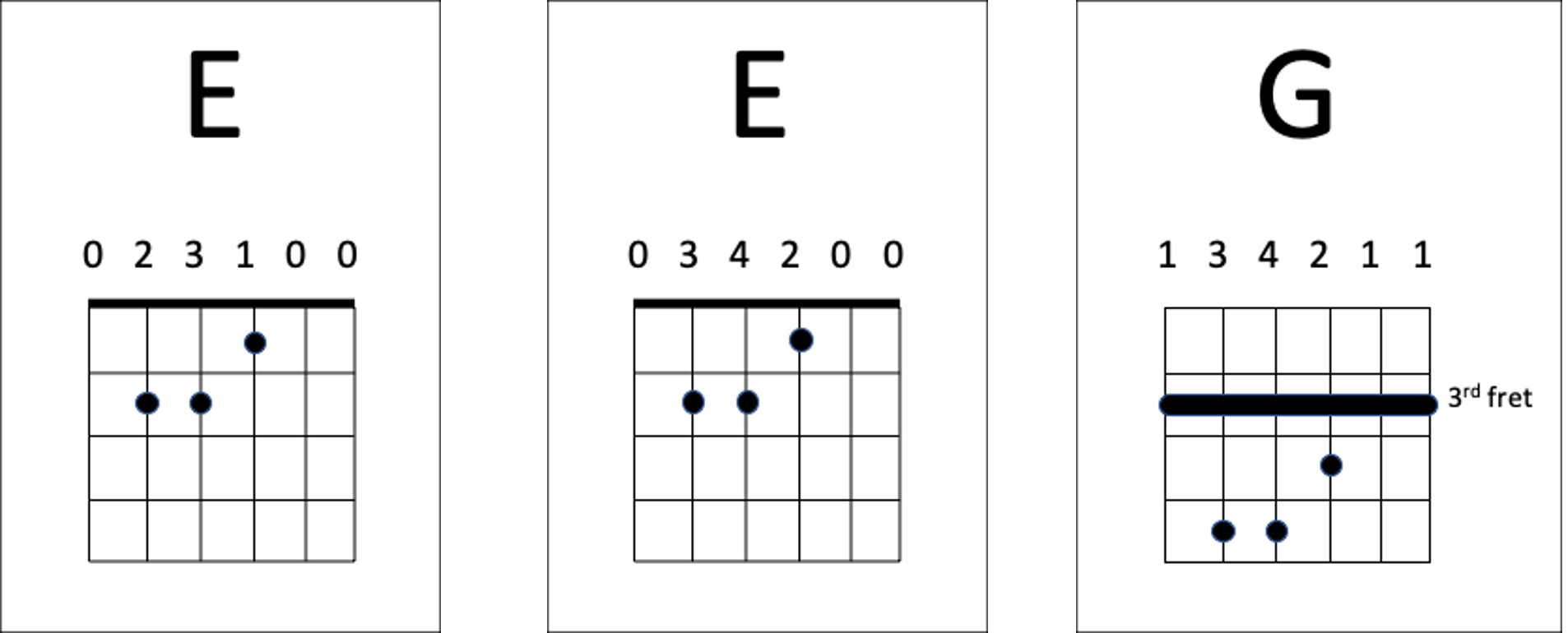
A further challenge is the need to use different fingers to form the basic chord shape as the first finger is preoccupied by the barre as illustrated in Figure 1. The subtle differences in the fingering for the basic chord shape is easily overlooked if the guitarist focuses only on the voicing. The standard fingering for an E major chord using fingers 1, 2 and 3 is not suitable for a barre chord as the first finger is needed to form the barre. An alternate fingering using fingers 2, 3 and 4 are used to form the same voicing in the same position, as shown in the second chord shape diagram, reserving the first finger for the barre. Once the alternate fingering and the barre have been mastered, they can be merged to form a barre chord.
Practicing the fingering in the second diagram enabled participants to establish a sense of familiarity with the new fingering. Once established, the barre played by the first finger can be introduced and the chord can be played anywhere up and down the fretboard, as depicted in the third chord shape diagram. In this example, the barre is placed on the 3rd fret and the root note is played on the E string making the root note G (see the annotated fretboard). This principle was applied to other chord shapes to enable participants to play chord progressions in all 12 keys. E and A chord shapes are the most commonly used to form a basis for barre chords, however, any chord requiring three or less fingers can be used.
Additional chord diagrams for A and E shape barre chords