Chapter 3 – Music
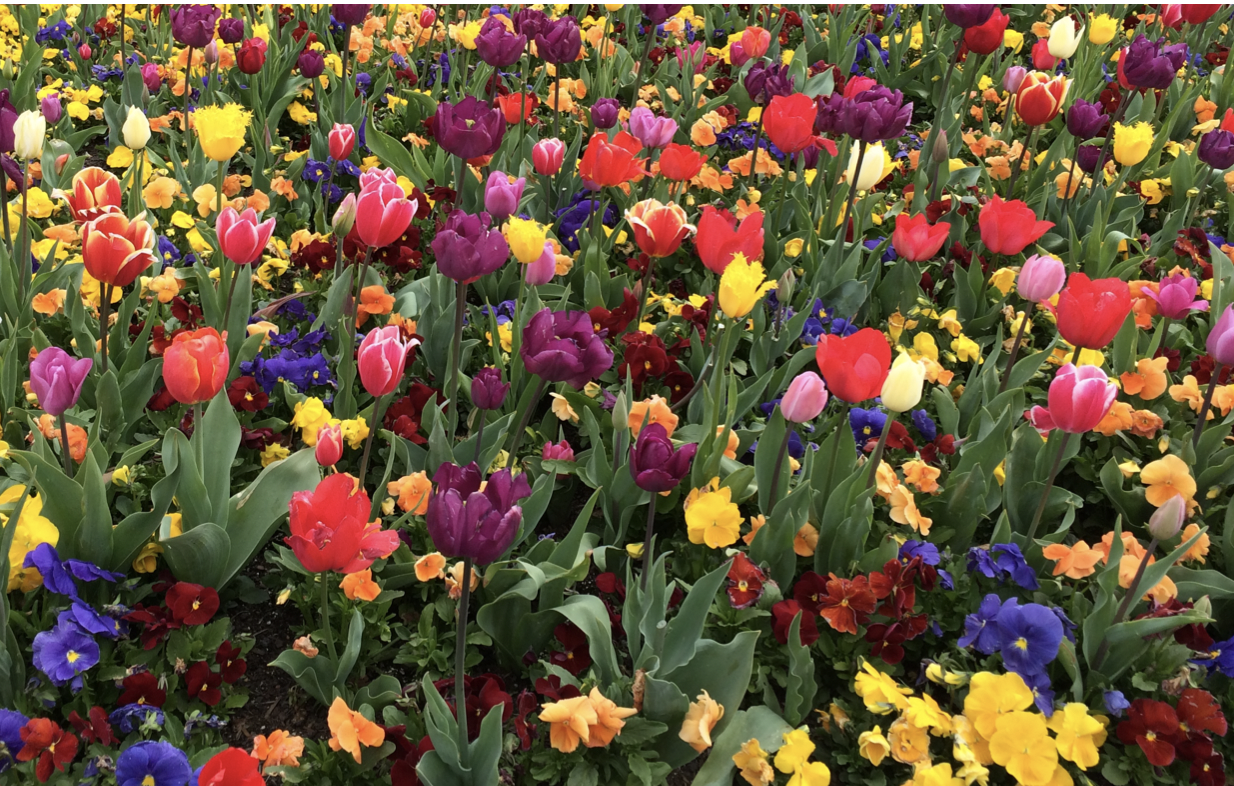
When playing together, even when they play in unison , individuals will play slightly differently (Keil, 1987). This photo features a flowerbed, mostly tulips, though some other varieties too. Amongst the tulips, there are a number of different varieties – a range of colours, some with multiple colours, some have curled petals. Within each specific variety one finds more subtle variation: some have opened more than others, some will have slightly larger petals, more vibrant colours or stronger perfume. The flowerbed exemplifies a sense of collective individuality. Simultaneous uniformity and idiosyncrasy.
Different performers will treat the pulse differently, some on the beat, others slightly ahead or behind it to varying degrees. Different instruments, for example an Irish flute and a fiddle playing in unison will ornament differently as the ornaments naturally fall differently on different instruments. The balance will fluctuate as different instruments are more prominent in different registers.
In many music traditions, each repetition will be slightly different. Nuanced variation within repetition balances a sense of stasis and safely with forward motion.
The discrepancies, that is, the inconsistencies, the diversity, within music lead to and enhance participation. Keil’s concept of participatory discrepancies articulate an approach to embracing the musical diversity of individuals and putting it at the centre of musical connection. (Keil, 1987, Keil & Feld, 1994). Embracing these subtle differences and gradual developments enable us to move past mirroring and engage in musical dialogue and musical development (Keil 1987; Aigen, 2002).