

Chapter 1 – Setting The Scene
An Overview
Through my work teaching and supervising music therapy students and new graduates, I observed a pattern where two significant qualities of contemporary music therapy practice are often on the fringes of many music therapists experience: playing the guitar and adapting music in response to a musical collaborator.
Malleably Musical is the name of the guitar program developed and tested in Part 2 of this study. Malleability imbues the capacity to be hammered into shape. Rather than hammering, this program uses its four pillars of concepts, listening, modular technique, and integration to shape participants’ musicianship as tools of trade. The title expresses the program’s goal of instilling this quality into the musical approach of music therapists.
Rather than delving straight into the guitar, MM opens with a collection of concepts to help frame the guitar skills that follow. The conceptual framework was from arts philosophy, music philosophy, popular music studies, music therapy, and themes from an interview series with diverse musicians that explored musical flexibility, responsiveness and connectedness.
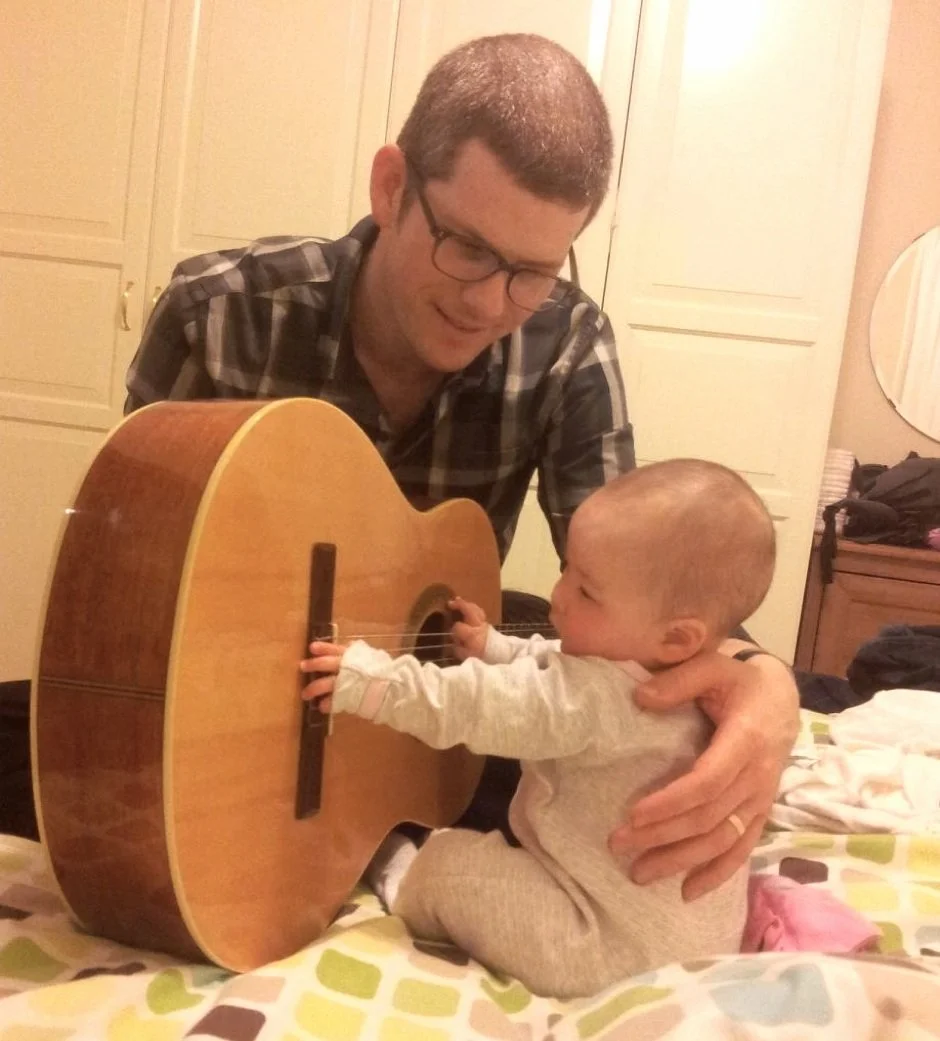
The guitar is typically the instrument of choice for Australian music therapists for its portability as it is common to work across multiple sites in a single day and well-maintained pianos are increasingly rare. Yet many music therapists trained on the piano and few received formal training on guitar, let alone therapeutic applications of the guitar. Not only is the guitar beyond the habitus* of many music therapy students, but they often learned music in recital-based settings with limited exposure to unscored music making. To get by on placement, students typically pair a few chord shapes with simplistic strumming patterns. Furthering their guitar skills often slips down the list of priorities as other development needs arise on the steep learning curve of a graduate therapist.
These observations were confirmed by some of the music therapist respondents in the interview series, where musical flexibility was left to students to resolve themselves. Some were able to do this while others struggled until they eventually found an approach that worked for them -often several years into their careers.
Similar experiences were also reported in participant intake interviews for the study where this program was developed and tested. Many described encountering the guitar for the first time in their music therapy training or during audition preparations, which is a common entry point to music therapy training. Participants reported limited or no guitar tuition in their music therapy training, and some indicated they were advised to source their own guitar tuition to supplement the course content to prepare them for clinical placements.
Many participants reported minimal (if any) training in using music flexibly, even on their first instrument. Some of the more established music therapists reported gradually finding ways to play music flexibly and have since brought this approach into their music practice outside of music therapy. However, many others reported this took decades and was neither an easy or natural process. Relying heavily on guitar with limited technical skills and knowledge, and limited experience playing unscored music leads to relatively low levels of confidence in using the guitar effectively in music therapy.
Malleably Musical aims to support music therapists and other musicians develop musical flexibility and responsiveness through a holistic blend of theoretical, aural, practical and social strategies. The modular structure of the program allows participants of all levels to share the learning space.
Malleably Musical is ever evolving in response to participant feedback and requests. Please reach out if you have any comments, suggestions or queries.
*See post on Pierre Bourdieu’s concept of habitus In the philosophy chapter of this course.